


Rubisco is the main enzyme that is responsible for capturing carbon dioxide and turning it into sugars for the plant. Turns out, that while Rubisco is one of the most vital components of photosynthesis—it’s not very good at its job in most crops such as cowpeas, soybeans, and rice. About 35 percent of the time, Rubisco tries to fix oxygen instead of carbon dioxide. This error produces a carbon compound called glycolate that the plant must recycle to salvage a portion of carbon that can be used in photosynthesis. This recovery process, however, costs the plant a large amount of energy. The RIPE team has created a shorter recovery pathway, conserving energy and resources that the plant can reinvest to increase crop productivity by as much as 40 percent, according to work published in Science in 2019. Right now our team is translating these findings to key food crops including potatoes and soybean.














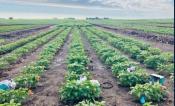
Shortcutting photorespiration: A pathway to improve tomorrow’s crops
Original story blurb: As global populations grow and temperatures rise, researchers are exploring ways to help crops withstand heatwaves by improving photosynthesis. In a Tansley Review published in New Phytologist, a team from the Realizing Increased Photosynthetic Efficiency (RIPE) project summarizes advances in engineering plants to bypass photorespiration—an energy-expensive process that limits crop productivity—and outlines challenges and next steps needed to translate this research to farmers’ fields.
By: Katie Brady || Carl R. Woese Institute for Genomic Biology
Study: Microalgae and bacteria team up to convert CO2 into useful products
Scientists have spent decades genetically modifying the bacterium Escherichia coli and other microbes to convert carbon dioxide into useful biological products. Most methods require additional carbon sources, however, adding to the cost. A new study overcomes this limitation by combining the photosynthetic finesse of a single-celled algae with the production capabilities of the bacteria E. coli.
By: Diana Yates || Illinois News Bureau

RIPE 'hot potato' research appears in Scientific American
RIPE's Katherine Meacham-Hensold was interviewed for an article in Scientific American about her research looking at shortcutting the photorespiration process in potato.
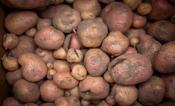
Climate-ready crop: RIPE team shows increase in food mass through photorespiratory bypass in elevated temperatures
A team from the University of Illinois has engineered potato to be more resilient to global warming showing 30% increases in tuber mass under heatwave conditions. This adaptation may provide greater food security for families dependent on potatoes, as these are often the same areas where the changing climate has already affected multiple crop seasons. Their work was recently published in Global Change Biology

Researchers improve seed nitrogen content by reducing plant chlorophyll levels
Chlorophyll plays a pivotal role in photosynthesis, but it uses a lot of a plant's resources. RIPE researchers wondered if they reduced a plant's chlorophyll levels, if the plant would invest those resources in other areas, potentially improving nutritional quality or yield. Their findings were recently published in the Plant, Cell & Environment journal.
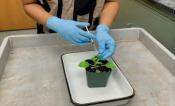
RIPE team develops toolkit for synthetic biology
A team from Louisiana State University (LSU) has developed a number of synthetic biology tools for plant geneticists to use to drive the expression of genes.