


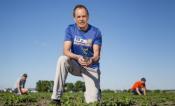
Tracing a path through photosynthesis to food security
The energy that plants capture from sunlight through photosynthesis provides the source of nearly all of humanity’s food. Yet the process of photosynthesis has inefficiencies that limit crop productivity, especially in a rapidly changing world. A new review by University of Illinois scientists and collaborators reflects on how improving photosynthesis can bring us closer to food security.
By: Claudia Lutz || Carl R. Woese Institute for Genomic Biology
RIPE Researchers Recognized as 2025 Clarivate Analytics Highly Cited Researchers
RIPE Researchers Donald R. Ort, Tracy Lawson, and Stephen P. Long have been recognized on the 2025 Clarivate Analytics Highly Cited Researchers list.
By: Diana Yates || University of Illinois College of Liberal Arts & Sciences

Shortcutting photorespiration: A pathway to improve tomorrow’s crops
Original story blurb: As global populations grow and temperatures rise, researchers are exploring ways to help crops withstand heatwaves by improving photosynthesis. In a Tansley Review published in New Phytologist, a team from the Realizing Increased Photosynthetic Efficiency (RIPE) project summarizes advances in engineering plants to bypass photorespiration—an energy-expensive process that limits crop productivity—and outlines challenges and next steps needed to translate this research to farmers’ fields.
By: Katie Brady || Carl R. Woese Institute for Genomic Biology

What food and drink will the UK grow as temperatures rise?
Climate change is reshaping what we grow and where we grow it — raising opportunities but also threats as to how we can keep feeding ourselves
By: George Nott || The Grocer
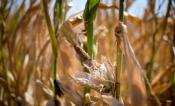
Soaring Temperatures Threaten Crops, So Scientists Are Looking to Alter the Plants
Genetically altering crops may be key to helping them adapt to extreme temperatures. But shrinking funds and social acceptance stand in the way.

Review: Heat-resilient crops are within reach — given enough time and money
Laboratory and field experiments have repeatedly shown that modifying the process of photosynthesis or the physical characteristics of plants can make crops more resilient to hotter temperatures. Scientists can now alter the abundance or orientation of leaves, change leaf chemistry to improve heat tolerance and adjust key steps in the process of photosynthesis to overcome bottlenecks, researchers report in a new review in the journal Science.
By: Diana Yates || Illinois News Bureau
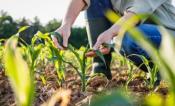
Genetic fixes may save crops from climate stress
Rising heat, relentless drought, violent downpours and a steadily thickening blanket of carbon dioxide are reshaping the planet on which agriculture depends.
In a recent review, University of Illinois Urbana-Champaign plant biologist Stephen Long has surveyed that changing landscape and the research aimed at ensuring food crops can still thrive.
By: Andrei Ionescu || Earth.com
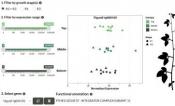
Easy Cowpeasy: RIPE team develops new gene expression tool for cowpea
A team from the Realizing Increased Photosynthetic Efficiency project has developed a tool that will enable scientists to better explore cowpea gene expression with the click of a button. CowPEAsy is an open-access interactive web tool that allows researchers to look at specific genes within three levels of the plant canopy during two points of the growing season.
By: Allie Arp and Claudia Lutz || Carl R. Woese Institute for Genomic Biology
Study: Microalgae and bacteria team up to convert CO2 into useful products
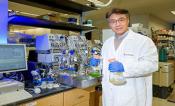
Scientists have spent decades genetically modifying the bacterium Escherichia coli and other microbes to convert carbon dioxide into useful biological products. Most methods require additional carbon sources, however, adding to the cost. A new study overcomes this limitation by combining the photosynthetic finesse of a single-celled algae with the production capabilities of the bacteria E. coli.
By: Diana Yates || Illinois News Bureau
Lawson brings renowned plant science expertise to Illinois
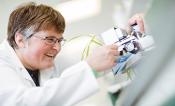
Tracy Lawson's fascination with plants started as a child on a farm in England and recently brought the globally recognized expert in plant biology across the pond to Illinois! One of the university's newest faculty members talks about her research and what she's looking forward to most in this new feature!

Shooting for the moon to nourish all life on Earth
Dr. Joe Cornelius, the CEO of RIPE sponsor Gates Agricultural Innovations, highlights agricultural innovations from the RIPE project and provides an expert perspective on how we can turn scientific advances into real-world solutions.

RIPE 'hot potato' research appears in Scientific American
RIPE's Katherine Meacham-Hensold was interviewed for an article in Scientific American about her research looking at shortcutting the photorespiration process in potato.

Ainsworth and Carmo-Silva tapped to lead internationally acclaimed RIPE project
Lisa Ainsworth has been promoted to Director of the RIPE project and Elizabete Carmo-Silva has been chosen as Deputy Director.

Long/Ort step back from RIPE leadership roles they helped create
After decades of impactful and prolific research, two photosynthesis trailblazers are passing the torch, Stephen Long and Donald Ort are retiring from their RIPE project leadership roles.

RIPE 2024 Top Stories of the Year Countdown
During the week between Christmas and New Year’s, the RIPE social media pages counted down the top five stories of the year. See the countdown in its entirety here.